



SKU: AC14
Pasto Chair


Pair it with ↓


Guaranteed Safe Checkout


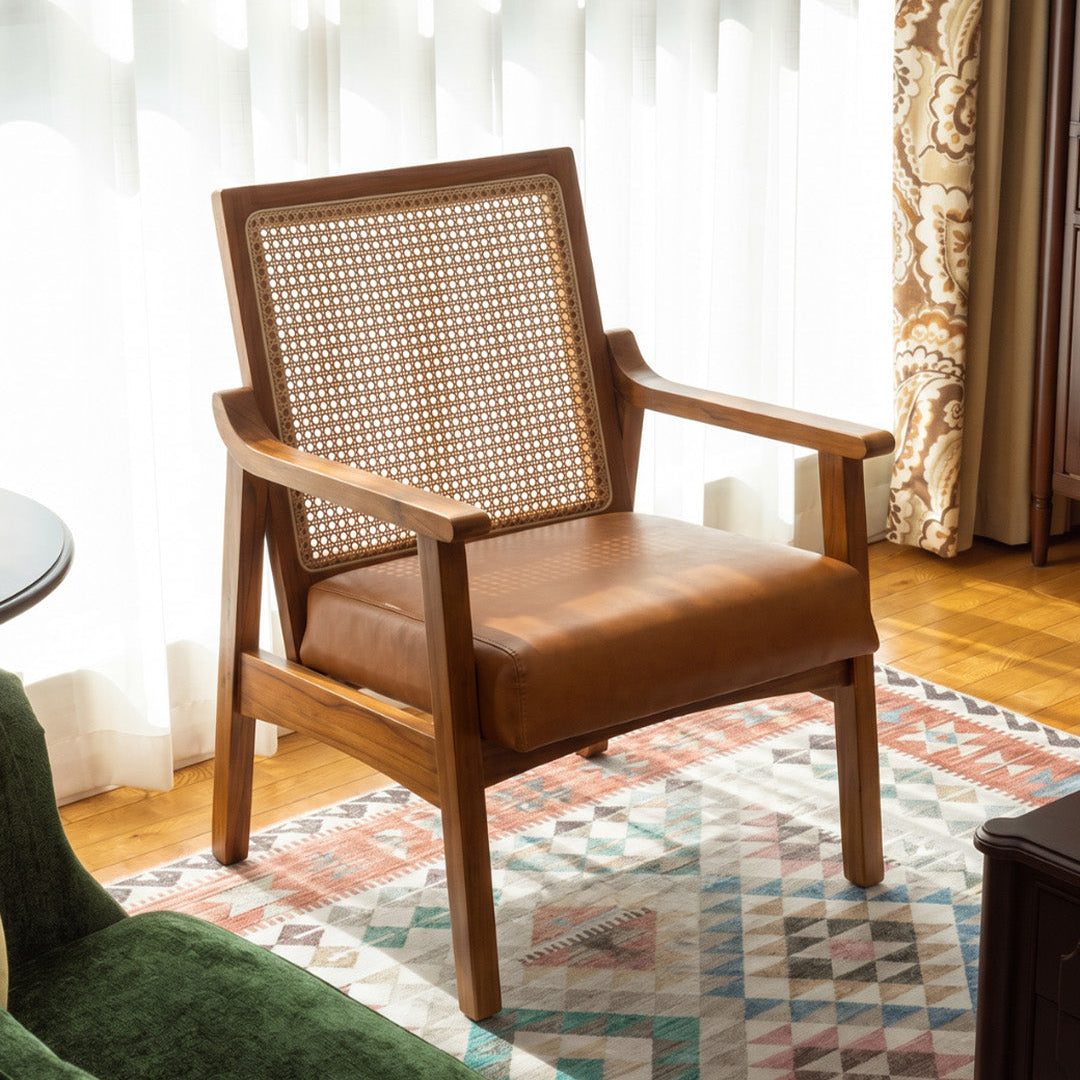
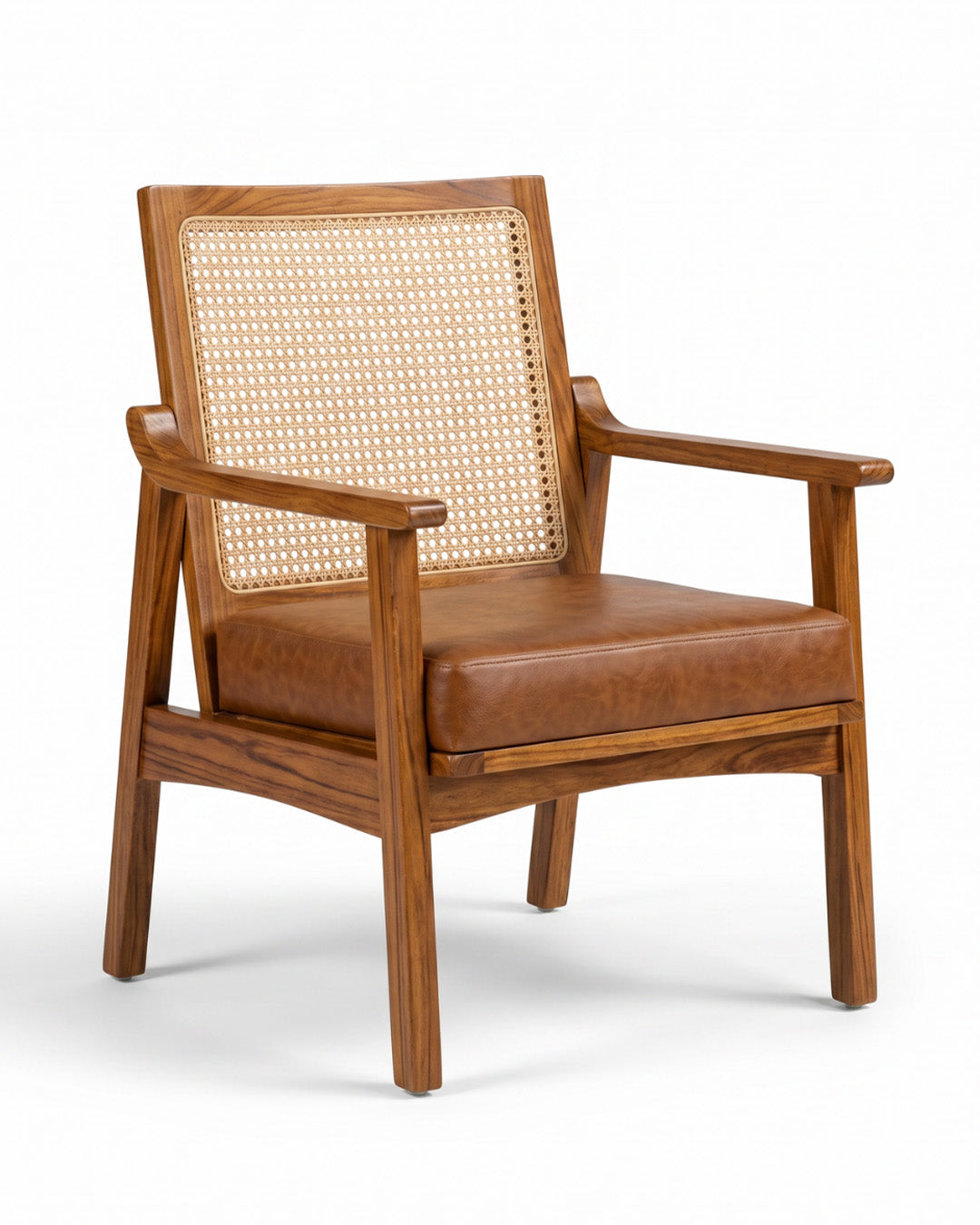
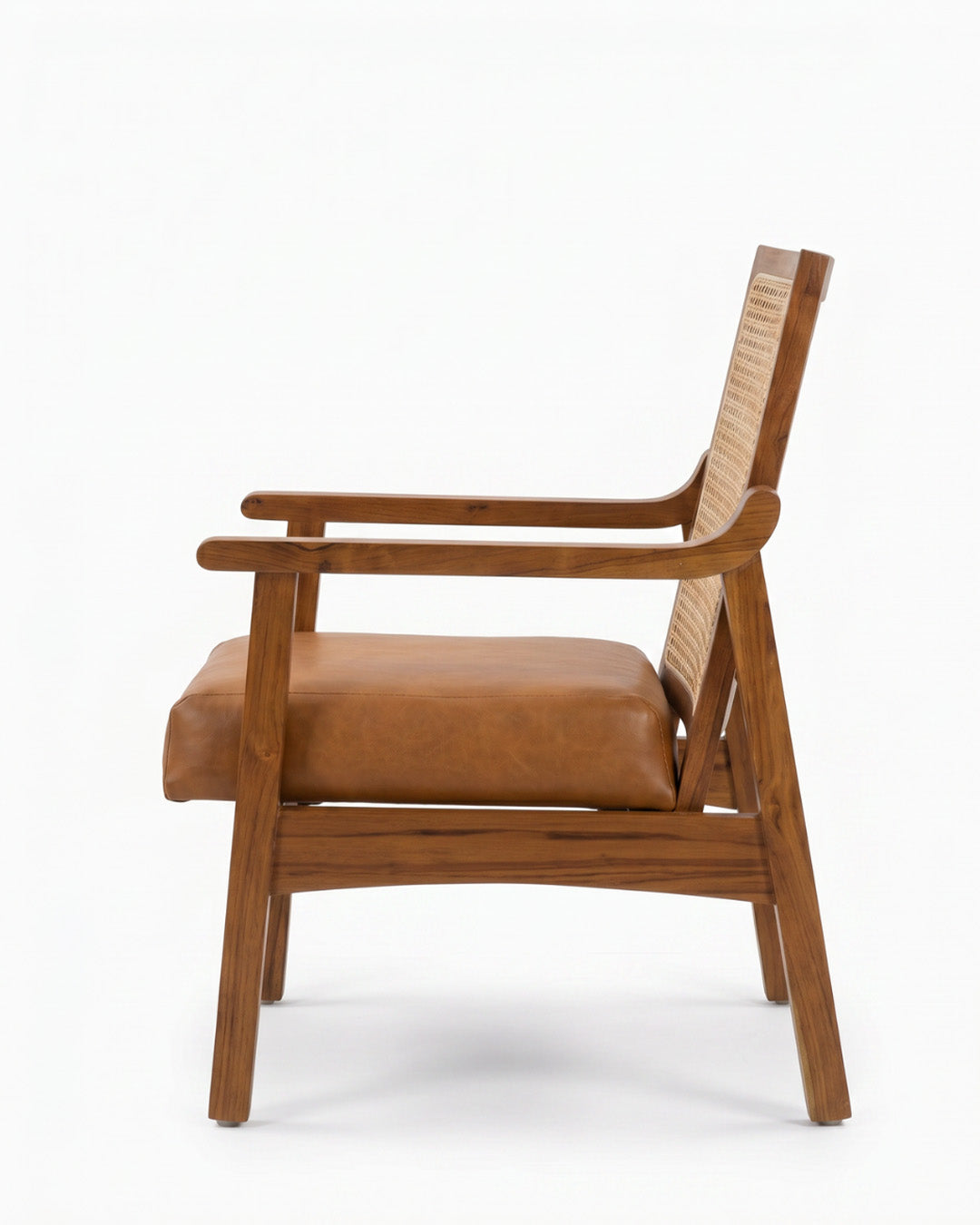
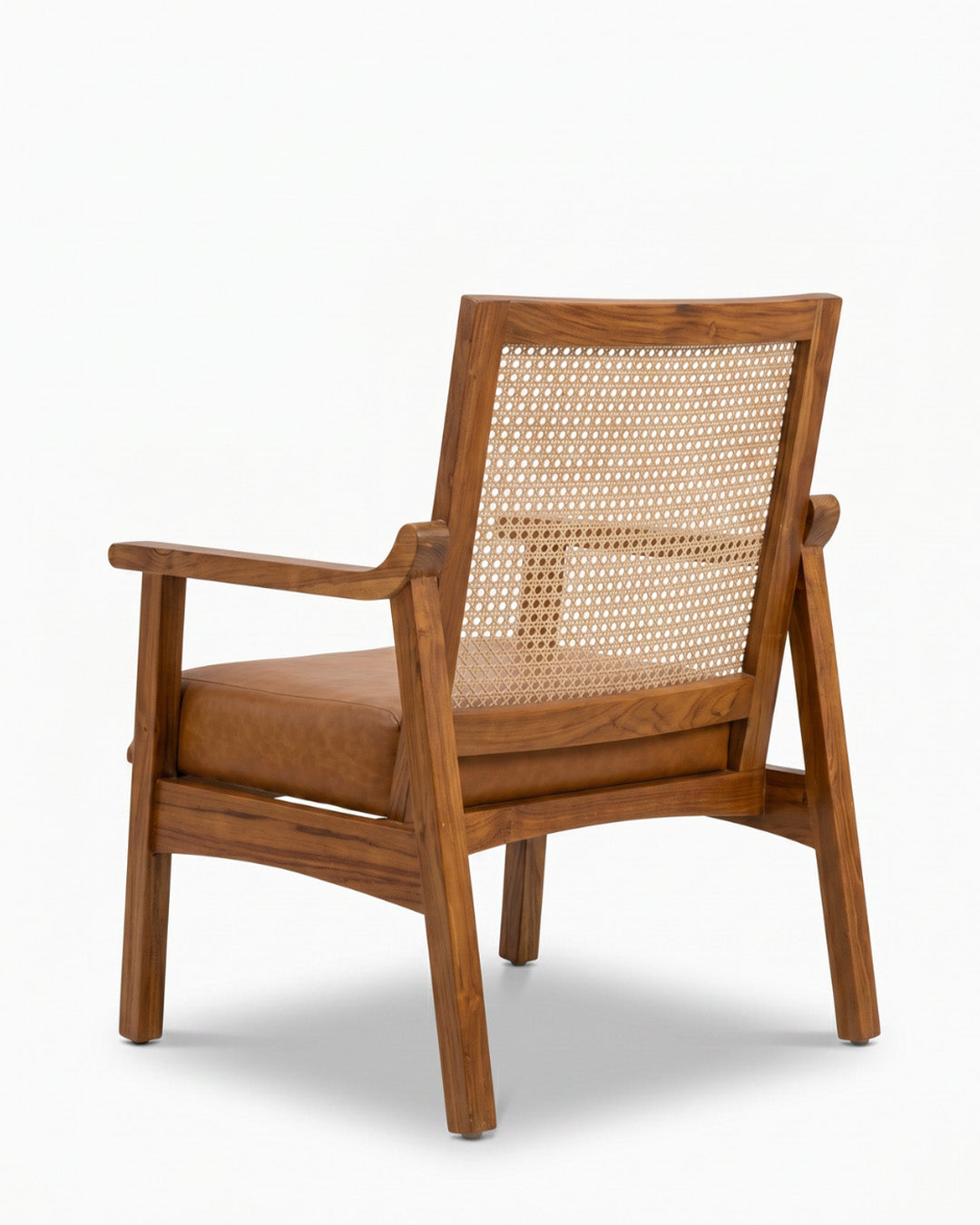
This lounge chair brings together the warmth of natural timber, the craft of traditional woven rattan and the richness of leatherette upholstery in a silhouette that feels both relaxed and thoughtfully designed. Its overall character sits comfortably between mid-century furniture and contemporary natural interiors, drawing on familiar principles of proportion, material honesty and structural simplicity while introducing enough warmth to make the piece feel distinctly inviting. The frame is crafted from acacia wood and finished in a warm honey tone that allows the natural character of the timber to remain an important part of the design. Rather than hiding the grain beneath an opaque treatment, the honey finish enriches the wood and brings out its natural variation, giving the chair a tactile and organic quality. The frame follows a clean architectural structure, with four angled legs supporting the seat and back while gently curved arms extend outward to create a comfortable boundary around the sitter. The proportions are generous without appearing oversized, making the chair substantial enough to anchor a reading corner or living room arrangement while remaining visually open. The backrest is framed entirely in wood and filled with natural rattan, creating a woven panel that immediately draws attention through its texture and pattern. The rattan adds a lighter visual layer to the solid wooden frame, allowing light to pass through the weave and preventing the back from becoming visually dense. This creates a particularly appealing contrast between the substantial timber structure and the delicate woven surface. Beneath the backrest, the leatherette seat provides a deeper and richer material expression. Its warm brown tone works naturally with the honey-finished acacia, creating a cohesive palette built around earthy colours. The upholstery has a smooth appearance that contrasts with the textured rattan, giving the chair several distinct tactile surfaces within a relatively simple form. The arms are carefully shaped to create a gentle forward curve, adding softness to the otherwise linear structure while also providing comfortable support. A lower wooden stretcher connects the side frames beneath the seat, adding structural stability while contributing another horizontal line to the design. The result is a chair that feels grounded, handcrafted and quietly sophisticated, with every material contributing something different to its overall character.
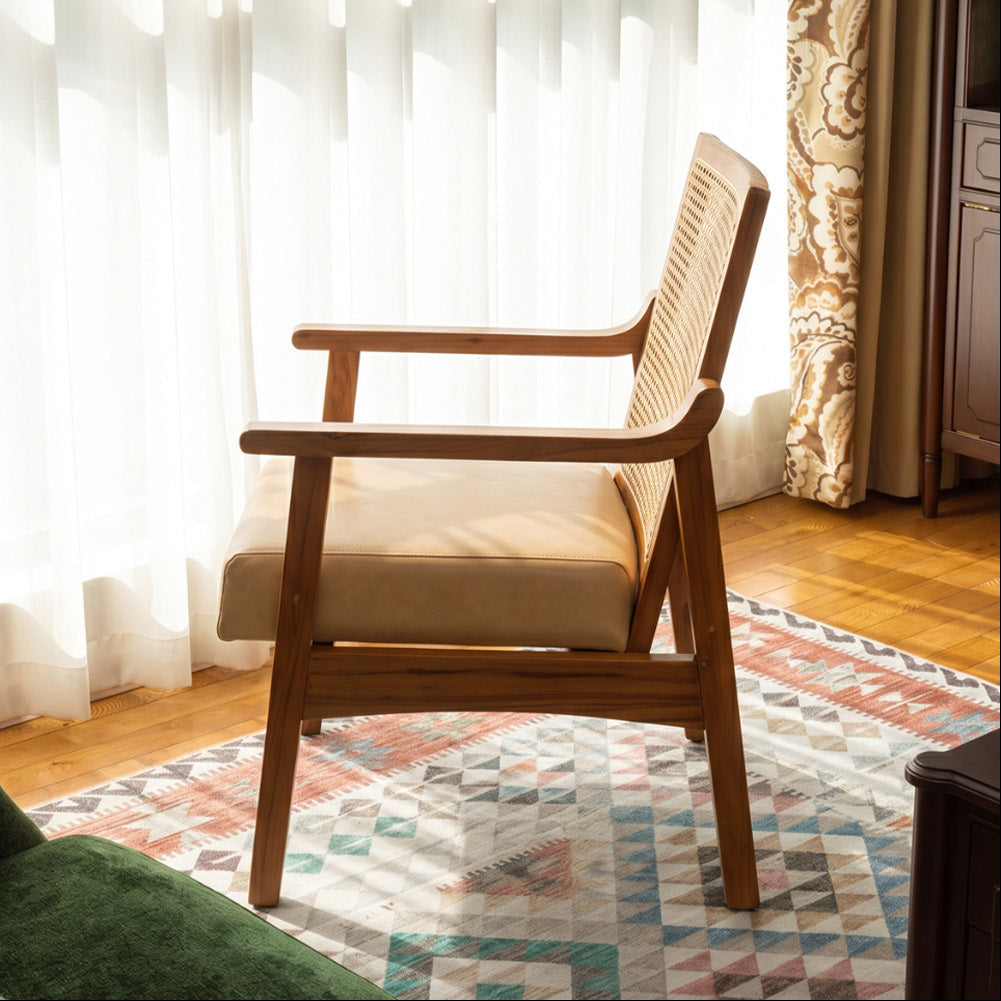
The acacia wood frame gives the chair its strongest sense of permanence. Acacia is naturally expressive, with grain patterns and tonal variations that can make each piece of timber visually individual. The honey finish enhances those characteristics, giving the wood a warm golden-brown appearance that works particularly well in spaces filled with natural light. The finish also creates a natural connection between the wooden frame and the leatherette seat, allowing the two warm tones to sit comfortably together without appearing overly matched. The legs are slightly angled rather than completely vertical, creating a subtle sense of movement and giving the chair a lighter visual footprint. This angled construction is strongly associated with mid-century furniture, where designers often used tapered or splayed legs to create furniture that appeared elevated and elegant without sacrificing stability. Here, the principle is softened through the use of substantial timber and rounded edges, giving the chair a more relaxed interpretation of that design language. The legs extend naturally from the frame, creating a continuous visual relationship between the upper structure and the floor. The front legs also connect into the arm structure, making the chair feel carefully integrated rather than assembled from separate components. The arms themselves are one of the most appealing elements of the silhouette. They begin at the rear of the chair and sweep gently forward, creating a supportive line without enclosing the user too tightly. Their rounded ends provide a softer point of contact and reinforce the handcrafted quality of the timber. Beneath the seat, the horizontal stretcher introduces additional structural support while also giving the lower portion of the chair a stronger visual rhythm. These horizontal and vertical elements work together with the angled legs to create a balanced composition. From the front, the chair feels symmetrical and grounded; from the side, the angled legs and curved arms become more prominent, revealing the furniture's sculptural qualities. This makes the chair suitable not only for conventional wall-facing placement but also for more open arrangements where its side profile can be appreciated. Its construction feels intentionally honest. The wood is clearly allowed to perform both structural and aesthetic roles, while the rattan and upholstery are used selectively where their qualities are most useful. Nothing feels unnecessarily added.
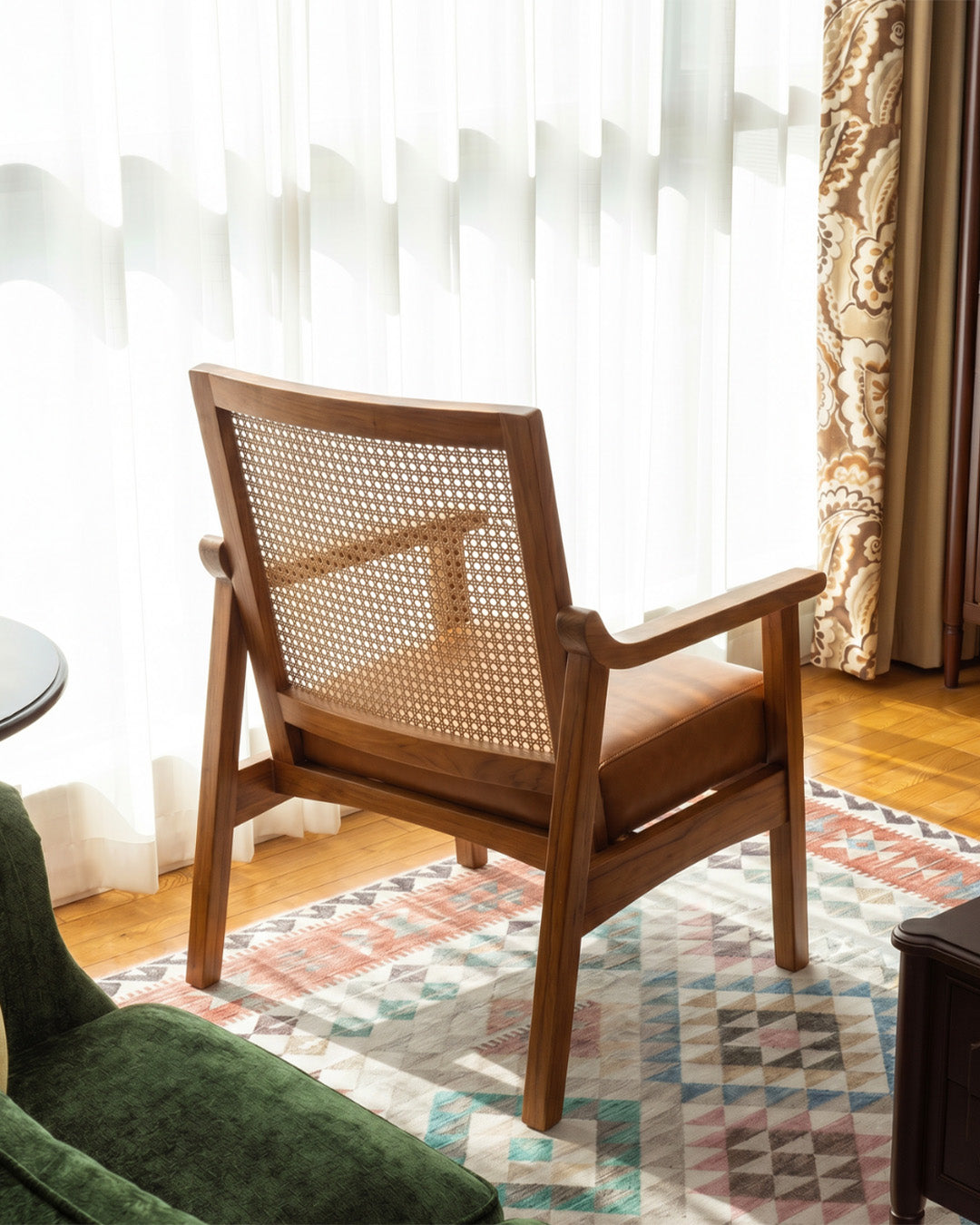
The natural rattan backrest introduces the most distinctive textural element of the chair. Its woven pattern creates a delicate visual grid that contrasts beautifully with the broader grain of the acacia frame. Rattan has a naturally relaxed quality that immediately makes furniture feel warmer and more connected to traditional craft. Here, however, it is framed within a relatively clean and structured silhouette, which gives it a contemporary interpretation. The rattan also serves an important visual purpose. Because the material is woven and partially transparent, it prevents the chair from appearing visually heavy despite the solid wooden frame. Light can pass through the weave, creating subtle variations throughout the day and allowing the chair to interact with its surroundings rather than becoming a completely solid object. This makes it particularly effective near windows, in sunlit reading corners or within rooms where natural light is an important part of the atmosphere. The woven back also provides a beautiful contrast against the smooth leatherette seat. The two materials offer very different tactile experiences: the rattan is dry, textured and intricate, while the leatherette is smooth, soft-looking and visually rich. This contrast creates depth without requiring additional ornamentation. The leatherette upholstery itself provides a practical seating surface while contributing warmth to the overall palette. Its caramel-brown appearance complements the honey finish of the wood and creates a cohesive, earthy colour story. The seat cushion has a generous proportion that allows the chair to feel comfortable rather than purely decorative. It occupies enough of the frame to create a substantial seating area while retaining the clean lines of the surrounding wood. The combination of leatherette and natural rattan also gives the chair an appealing balance between refinement and informality. Leather-inspired upholstery often brings a slightly more sophisticated or structured character, while rattan introduces a relaxed, handcrafted quality. Together they prevent the chair from leaning too far in either direction. It does not feel overly formal, but it also does not feel rustic or casual in a way that limits where it can be used. This material balance makes the chair especially adaptable. It can work in a contemporary apartment, a warm mid-century-inspired home, a relaxed coastal interior, a natural modern space or a more eclectic room where different textures are intentionally layered.
In everyday interiors, this chair can become a particularly useful piece because it occupies the space between a formal armchair and a casual lounge seat. Its proportions make it suitable for a reading corner, living room, bedroom, study or quiet sitting area. Positioned beside a sofa, it can introduce a different material and silhouette to a larger seating arrangement, helping create visual variety without disrupting the overall palette. The warm acacia frame can connect naturally with wooden flooring, cabinetry or other timber furniture, while the rattan introduces a woven element that can be repeated through rugs, baskets, lighting or decorative accessories. In a bedroom, the chair can create a dedicated place to sit, read or simply pause, especially when positioned near a window or beside a small side table. The leatherette seat also makes it particularly suitable for areas where a more structured upholstery material is preferred. In a study or home office, it can become an occasional reading chair, providing a comfortable alternative to a conventional desk chair. Its relatively open back and arms keep the piece from feeling visually enclosing, making it suitable even in smaller rooms where a bulky upholstered chair might feel overwhelming. Styling the chair can remain simple because its material combination already provides considerable visual interest. A neutral cushion placed against the rattan can introduce additional softness, while a folded throw can add colour or texture without hiding the frame. Alternatively, the chair can be left completely unadorned so that the woven rattan and natural timber remain the focus. It pairs particularly well with cream, ivory, warm white, terracotta, olive, rust, tan and muted green tones. These colours reinforce the natural palette without competing with the honey finish. The chair can also create an interesting contrast against darker walls or flooring, where the warm timber becomes a lighter, more tactile element. In a brighter room, it can blend naturally into a palette of linen, stone and natural wood. This flexibility makes it useful for interiors that may evolve over time. As surrounding décor changes, the chair's natural materials can continue to work with new colours and textures. Its design is not tied strongly to one particular decorative trend, which gives it a longer visual life. The combination of wood, rattan and warm upholstery has a timeless quality because each material brings a familiar tactile presence to the room.
Ultimately, this chair is a celebration of natural material, considered structure and relaxed craftsmanship. The acacia wood frame gives it strength and warmth, while the honey finish enhances the natural beauty of the timber and allows the grain to remain part of the visual story. The natural rattan back introduces a woven texture that lightens the silhouette and creates a strong connection to traditional material craft. The leatherette seat adds comfort and richness, bringing a smooth surface into contrast with the more textured wood and rattan. Its angled legs and curved arms give the chair a subtle mid-century influence, but the natural material palette prevents it from feeling overly retro or period-specific. Instead, it feels like a contemporary interpretation of a familiar furniture archetype — the classic wooden lounge chair reimagined through tactile materials and relaxed proportions. The chair's strongest quality is perhaps the way it balances different forms of character. It is structured but not rigid, warm but not rustic, refined but not formal, and handcrafted without appearing overly decorative. The open rattan back keeps it visually light, while the substantial wooden frame gives it enough presence to anchor a room. The leatherette seat invites use, making the chair feel like furniture meant to be lived with rather than simply looked at. Over time, it can become part of the everyday rhythm of a home: a place to sit with coffee in the morning, read in the afternoon, have a conversation in the evening or simply occupy a quiet corner at the end of the day. These ordinary moments are what allow a chair to become more than an object. The natural materials also have the ability to develop character through use, allowing the piece to feel increasingly familiar as it becomes part of its surroundings. The honey-finished acacia can remain warm and expressive, the rattan continues to provide its distinctive woven texture and the leatherette maintains the rich visual quality of the seat. Together, these elements create a chair that feels considered from every angle. It can stand as a sculptural piece when placed alone, yet it becomes even more meaningful when incorporated into everyday living. Its visual language is quiet enough to coexist with other furniture but distinctive enough to be remembered. Rather than chasing a particular trend, it relies on materials and proportions that have proven enduring across generations of furniture design. The result is a warm, tactile and versatile lounge chair that brings together the honesty of natural wood, the craft of woven rattan and the comfort of upholstered seating — a piece with enough refinement for an elegant interior and enough ease to feel completely at home.
- Crafted from Acacia Wood.
- Finished in a warm Honey tone.
- Features a woven Natural Rattan backrest.
- Seat upholstered in Leatherette / TU Leather.
- Angled wooden legs create a lighter visual profile.
- Curved wooden arms provide comfortable support.
- Lower wooden stretcher adds structural stability.
- Natural grain remains visible through the warm wood finish.
- Open rattan back keeps the chair visually light.
- Suitable for living rooms, bedrooms, studies and reading corners.
| Dimensions |
70 cm L x 68 cm D x 90 cm H (27.6" x 26.8" x 35.4")
Seat Height: 43 cm (16.9")
Seat Width: 52 cm (20.5")
|
| Material |
Primary Material: Solid Acacia Wood
Secondary Material: Natural Rattan
Upholstery: TU Leather
|
| Finish | Honey Finish |
*Refer to the attached specification sheet for dimensions and assembly information.
View Specification Sheet- Dust the acacia wood regularly with a soft, dry cloth.
- Clean the rattan gently using a soft brush or low-suction vacuum attachment.
- Avoid excessive moisture on the natural rattan.
- Wipe the leatherette upholstery with a soft, slightly damp cloth.
- Avoid harsh chemicals, alcohol-based cleaners and abrasive materials on the leatherette.
- Blot spills promptly rather than rubbing the upholstery.
- Keep the chair away from prolonged direct sunlight and strong heat sources.
- Avoid sharp objects that may scratch the leatherette or damage the rattan weave.
- Do not place excessive weight on the arms.
- Periodically check the wooden joints and frame for stability.
- Made to Order — Each piece is crafted specifically for you after your order is placed.
- This item is artisan crafted with meticulous care. Given its handmade and hand-finished nature, variations and imperfections are to be expected and celebrated. Each item is unique and no two are alike.
- Ships in 2–3 Weeks — Estimated dispatch time from our workshop.
- Floor Delivery Included — Delivery to your floor is included where service lift access is available.
- Staircase Handling — In buildings without a service lift, any additional labor required for manual carrying will be arranged locally and paid directly by the customer to the labor team.
- Expedited Shipping Available — Need it sooner? Priority production and shipping can be arranged at an additional 10% charge.
- Delivery Updates — You'll receive shipment details once your order is ready for dispatch.
- Delivery damage is fully covered — if your item arrives damaged during transit, we'll repair or replace it at no additional cost.